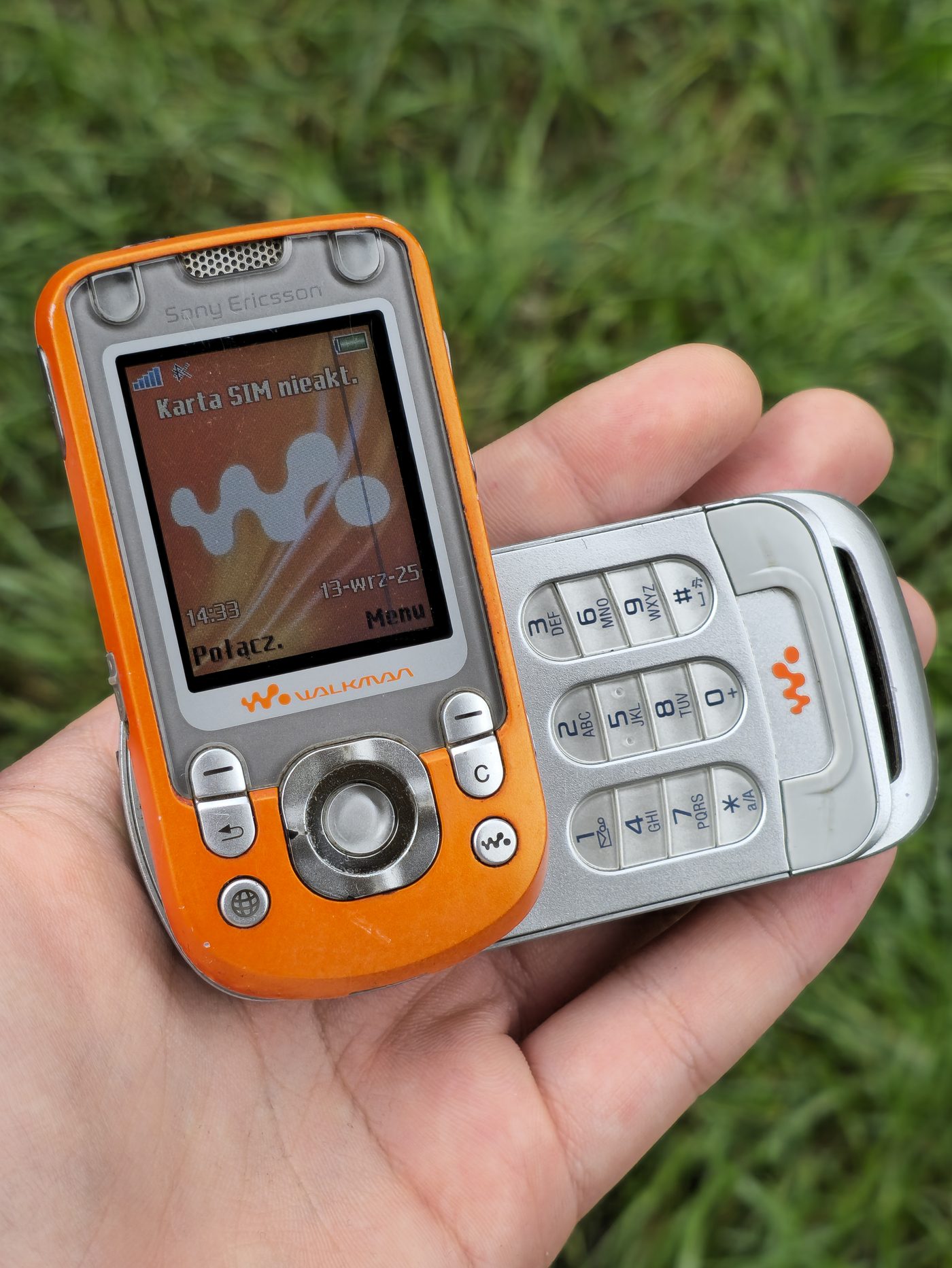
If you owned a Sony Ericsson W550i, you remember it. The swivel body, the orange-on-black Walkman menu, the mechanical spin to reveal the keypad. In 2006 it was one of the best-looking phones money could buy.
It played music beautifully and looked like nothing else in the pocket. It was a triumph of everything Sony Ericsson was brilliant at. It was also a warning the entire industry failed to read.
Here is the part worth sitting with: the failure that followed was not a failure of data. The companies that lost the next decade had more market research, more sales figures, and more consumer insight than anyone. What they lacked was the right frame for reading it.
Look at the landscape in 2007, the year Apple launched the iPhone. Nokia held about a third of the global market, and its Symbian system ran on roughly one in every two phones sold worldwide. Motorola was still riding the Razr. BlackBerry owned corporate email. Sony Ericsson sat fourth, around eight percent, on the strength of Walkman audio and Cyber-shot cameras. Five strong companies, each winning on the metric it had chosen to compete on.
The status map underneath the numbers
There was also a quieter map beneath the market-share figures. Phones carried social signal. Nokia was the default; everybody had one, which made it generic. Sony Ericsson was the considered choice — the phone for someone who cared about music, design, or a decent camera, a mark of taste for the mid-budget buyer. BlackBerry was the executive's tool, carried by dealmakers and the genuinely important, a badge as much as a device. Each company had carefully positioned itself on this ladder of who-carries-what.
Then the iPhone arrived, and almost every established player read it wrong.
Nokia saw a niche product from a computer company holding a sliver of the market and saw no reason to panic — it was still selling half the world's smartphones. One analyst later put it precisely: Apple killed Nokia immediately, but Nokia did not know it was dead for two more years. BlackBerry trusted that serious people would always want a physical keyboard and secure email. Microsoft's chief executive laughed at the iPhone on stage and said no one would want to type on glass. Each was reasoning correctly about the world as it was — and missing that the world was being replaced.
The careful segmentation that Sony Ericsson and BlackBerry had built their identities on did not lose. It ceased to exist.
The iPhone did not compete on the axes everyone else was measuring. It did not win on megapixels, on keyboard feel, or on social tier. It changed the question from "how good is the hardware" to "how good is the software and the experience," and in doing so it collapsed the entire status ladder beneath the market. The iPhone was not the music-lover's phone or the executive's phone. It was simply the phone everyone wanted, across every tier at once.
Answering the question that had vanished
Sony Ericsson kept answering the old question, and answering it superbly. The C905 became the first 8.1-megapixel phone; the Satio reached twelve. Every release was a confident, well-executed response to a question customers were quietly walking away from. The company stayed on Symbian too long, reached Android too late, and never owned its own foundations — it licensed its operating systems and sourced its components, so when the ground shifted it had nothing of its own to stand on. By 2011 it was shipping a fraction of its peak. That year Ericsson, seeing no future in straddling telecom and consumer phones, sold its half of the venture to Sony for just over a billion euros. The Walkman phone line died with the deal.
The lesson is not "they missed a trend." Everyone misses trends. The lesson is sharper and more uncomfortable: a business can be winning on every number it tracks and still be measuring the wrong thing. Weak companies fail visibly. Strong companies fail while the dashboard still reads green — because the metrics they trust have quietly stopped describing reality. Sony Ericsson's numbers looked healthy right up to the quarter they reversed.
Good intelligence is not more data on the metric you already trust. It is knowing when the metric itself has gone stale — when the question you have been answering so well is no longer the question the market is asking. That is a harder discipline than collecting numbers, and it is the difference between confident measurement and genuine insight.
Sol Gravitas exists for exactly that gap. Not more reports, not prettier dashboards — checking the frame. Surfacing the signal that the internal numbers are too comfortable to show, and asking the question the existing metrics were never built to answer.
The W550i was a beautiful phone. It is worth remembering fondly. It is also worth remembering as a lesson: being the best at the wrong thing is still being wrong.
Think with Insights.